The Soul of the Nation
If Makati is the office and Quezon City is the campus, Manila is the grandmother who has seen it all. It is the nation's capital, a city of layered histories where 16th-century Spanish stone fortifications sit mere minutes away from 21st-century bustling markets. It is raw, unapologetic, and frankly, a bit intense.
Manila isn't trying to be a polished, corporate hub. It’s a city of grit and glory. It’s the sound of thousands of jeepneys, the smell of street-side hawkers, and the sight of sunset reflecting off the waters of the bay. You don't just visit Manila; you experience it.
Layers of Time
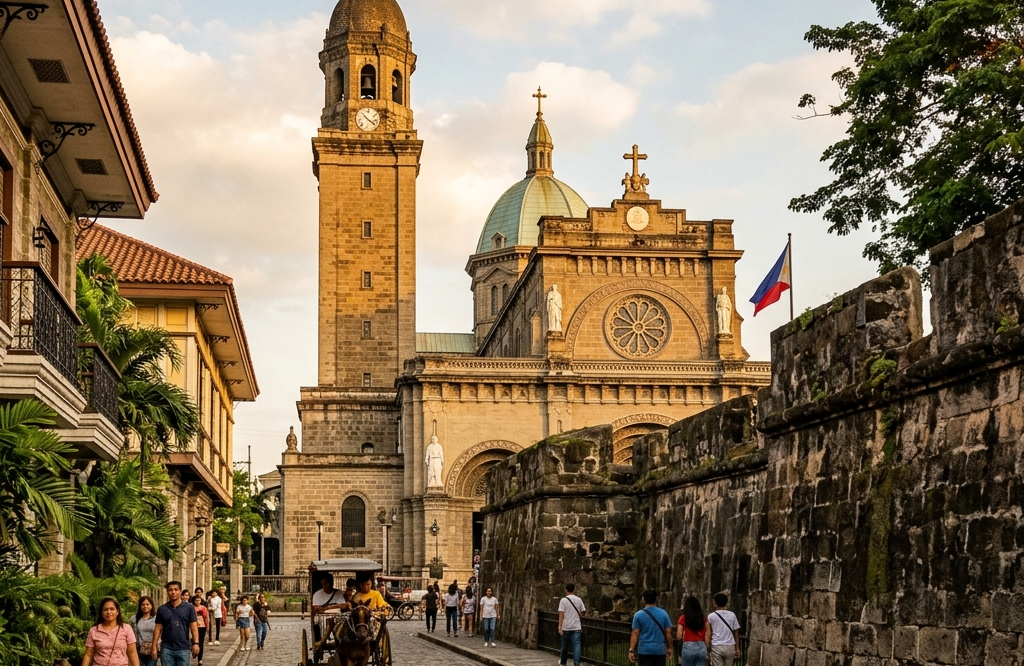
Walking through Manila is like playing a game of historical hopscotch. You can stand in the walled city of Intramuros and feel the weight of centuries, then walk outside the gates to find yourself in the frantic energy of Binondo, which is the oldest Chinatown in the world. It’s a place where you can find a quiet chapel, a bustling port, and a university all on the same street.
"Manila is an acquired taste, but once it gets under your skin, nowhere else feels quite as alive. It’s not about perfection; it’s about persistence."
Key Districts
Where to start your journey through the capital.
Intramuros
The Walled CityCobblestone streets, ancient churches, and history behind every corner. The colonial heartbeat of the Philippines.
Binondo
ChinatownThe culinary Mecca. If you’re coming for authentic dumplings, fried siopao, and a sensory overload, this is it.
Ermita & Malate
The Cultural EdgeThe historical bohemian center. Home to museums, street art, and the iconic view of the Manila Bay sunset.
Tondo
The Real ManilaIt’s the most densely populated, gritty, and authentic district. Not for the faint of heart, but it’s the true urban experience.
The Manila Experience
The magic of Manila is found in the gaps between the major landmarks. It’s the art of the kalesa (horse-drawn carriage) still clip-clopping through modern traffic. It’s the street food you find in Binondo that you can’t replicate anywhere else in the world. It’s the way the city slows down just long enough to catch the golden hour at the bay.
Practical Realities
Manila is a dense city. Be prepared for crowds, noise, and traffic that is legendary for a reason. But that’s the trade-off for being in the most vibrant, storied part of the Philippines. Use the LRT-1 to zip between districts if you want to save time, and always keep your wits about you, as it is all part of the urban charm.
Must-See Landmarks
Fort Santiago
The citadel at the mouth of the Pasig River. A site of profound historical weight and beautiful gardens.
Rizal Park
The grand public park dedicated to the national hero. The lung of the city and a site for open-air concerts and history.
Binondo Food Trail
Forget the malls. This is where you find the best authentic food in the country, period.
National Museum
The home of Philippine art and history. A must-visit to understand the context of the city you are walking through.
Final Pro-Tip
Manila rewards the curious. Wear comfortable shoes, stay hydrated, and don't be afraid to put away the Google Maps for a few hours. Some of the best stories in this city are found down the narrow alleys you weren't looking for.
Updated on Jun 17, 2026 by George Gemson