Where the First Republic Was Born
Malolos is the capital city of Bulacan province, located about 47 kilometers north of Manila along the MacArthur Highway and the North Luzon Expressway (NLEX). It's the kind of place that gets underestimated by people who haven't visited. The name rings a bell from your high school history class, something about the Malolos Constitution, but the real city is much more layered than just a textbook footnote.
- Province/Region: Bulacan, Central Luzon
- Best For: Heritage tourism, pasalubong food shopping, historical churches, weekend day trips from Manila
- Average Spend: ₱150 - ₱350 per person (dining and pasalubong)
- Transit: 1 - 1.5 hours from Manila via NLEX; buses from Cubao (Five Star, Baliwag Transit); future MRT-7 line (projected 2027 opening)
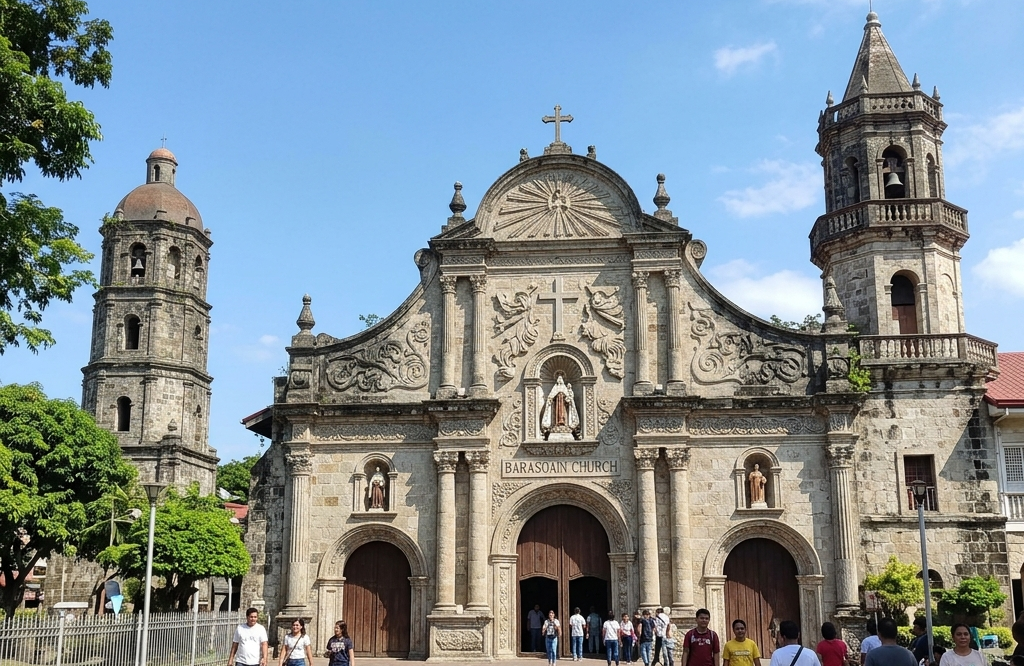
The historical weight of this city is significant. Barasoain Church (formally Our Lady of Mount Carmel Parish) is where the First Philippine Congress convened in 1898 and where the Malolos Constitution was drafted. This is where the First Philippine Republic was inaugurated in 1899 with Emilio Aguinaldo as president. The church itself is a National Shrine, blending Baroque and Neoclassical architectural styles, and the former convent has been converted into a museum that houses artifacts from the revolutionary period. It's called the "Cradle of Democracy in the East" and that title isn't exaggeration.
"You walk into Barasoain Church and the weight of what happened here just hits you. This is where a nation decided to write its own constitution. The pews are simple, the altar is modest, but the significance of the space is enormous."
The Kamestisuhan Heritage District
The heritage walking doesn't end at Barasoain. Malolos has the Kamestisuhan District (also known as the Pariancillo District), a collection of well-preserved ancestral houses dating from the Spanish and American colonial periods. Walking through this area feels like stepping back to the 19th century. The Bautista and Santos houses are among the most notable, showcasing the architectural evolution from ornate Spanish-era bahay na bato to the cleaner lines of early 1930s American influence.
Then there's the Casa Real Shrine, originally built in 1580 and one of the oldest structures in the city. It served as the seat of the Malolos Congress and housed the printing press of the First Philippine Republic. Today it functions as the Museum of Philippine Political History, with relics and memorabilia from the independence struggle. It's a small museum, but the collection is focused and genuinely interesting. You can cover the heritage district on foot in a couple of hours, which makes it a manageable day trip from Manila.
Ensaymada, Inipit, and the Pasalubong Economy
Honestly, a lot of people visit Malolos not for the history but for the food. And who can blame them? This city has built an entire cottage industry around its baked goods and sweets. The Malolos ensaymada is the star. It's distinct from the Metro Manila versions: a larger, darker-baked bun topped generously with butter, sugar, grated cheese, and a slice of salted duck egg. The salted egg is what makes it uniquely Malolos.
Eurobake is the institution for this. It's been operating for decades and is basically a required stop for anyone passing through. Beyond ensaymada, they also popularized inipit, a light chiffon sponge cake with custard cream filling. The Ramos family, who runs Eurobake, is credited with originating this particular treat, and it's become one of the most copied bakery items in Bulacan.
Other local specialties worth hunting down include empanada de kaliskis (named for its flaky, scale-like crust), pastillas de leche (the carabao's milk and sugar candies that Bulacan province is famous for, though the original pastillas tradition comes from nearby San Miguel, Bulacan), and pancit Malolos. The pasalubong shops along the highway do brisk business, especially on weekends when Manila residents drive up specifically to stock up.
MRT-7 and the Real Estate Boom
The big story for Malolos right now isn't history or ensaymada. It's infrastructure. The MRT-7 project, a 22-kilometer rail line with 14 stations connecting Quezon City to Bulacan, is currently at about 86.5% completion and projected to open in 2027. The project has faced delays due to right-of-way acquisition issues, especially in the San Jose del Monte segment, but the progress in recent months has been visible.
When it opens, MRT-7 is expected to drastically reduce travel times between Bulacan and Metro Manila, relieving congestion on Commonwealth Avenue and the NLEX corridor. That expectation has already driven significant real estate activity. Property values in areas near the planned stations have been appreciating steadily, and major developers have been launching residential and mixed-use projects targeting the growing middle class and OFW families who want more space than what Manila offers at a fraction of the price.
Malolos itself has seen new subdivision and condominium developments spring up along the NLEX access roads. Residential lot prices that were ₱3,000 - ₱5,000 per square meter a decade ago have climbed significantly with the infrastructure announcements. For investors, the gap between Malolos land values and comparable Metro Manila properties is still large enough to be interesting, but the window is closing as the MRT-7 completion date approaches.
Updated on Jun 17, 2026 by George Gemson
Malolos Highlights
Revolutionary history, legendary bakeries, and a city on the verge of a transit transformation.
Barasoain Church
National ShrineThe "Cradle of Democracy in the East." Site of the First Philippine Congress in 1898 and the drafting of the Malolos Constitution. The convent museum is worth your time.
Kamestisuhan Heritage District
Walking TourA preserved collection of Spanish and American-era ancestral houses. Walk the Bautista and Santos houses, then visit Casa Real Shrine, now the Museum of Philippine Political History.
Eurobake & Pasalubong
Local Bakery IconHome of the Malolos ensaymada with salted duck egg and the original inipit. Stock up on empanada de kaliskis and pastillas de leche while you're at it.
MRT-7 Corridor
Opening 2027A 22-kilometer rail line that will connect Bulacan to Quezon City. Already driving real estate appreciation and new developments along the planned station areas.