From Rice Fields to University Belt
Dasmariñas is a first-class component city in Cavite province, located about 30 kilometers south of Manila along Aguinaldo Highway. With a population exceeding 700,000, it's the most populous city in Cavite and one of the largest in the entire CALABARZON region. And the growth trajectory hasn't slowed down. What was a quiet agricultural town two decades ago is now a dense urban center anchored by universities, hospitals, malls, and industrial estates.
The city's unofficial title, "University City of Cavite," is well-earned. The concentration of higher education institutions here has created a permanent demographic tilt toward young people, and that shows in everything from the food options to the rental market to the general energy of the place. Walk along Congressional Avenue on a weekday afternoon and you'll see what I mean: students in uniforms everywhere, milk tea shops on every other corner, and print shops doing thesis binding at alarming speeds.
- Province/Region: Cavite, CALABARZON (Region IV-A)
- Population: ~700,000+ (largest in Cavite)
- Best For: Affordable student living, university education, budget dining, commercial shopping
- Average Spend: ₱150 - ₱350 per person (dining)
- Transit: Aguinaldo Highway jeepneys/FX vans; CALAX via Dasmariñas interchange; buses from PITX and Alabang
"Dasma runs on student energy. The cafes are packed during midterms, the boarding houses fill up every June, and the jeepney routes around DLSU-D are some of the most consistent in Cavite because there's always someone who needs a ride to class."
The Schools That Built the City
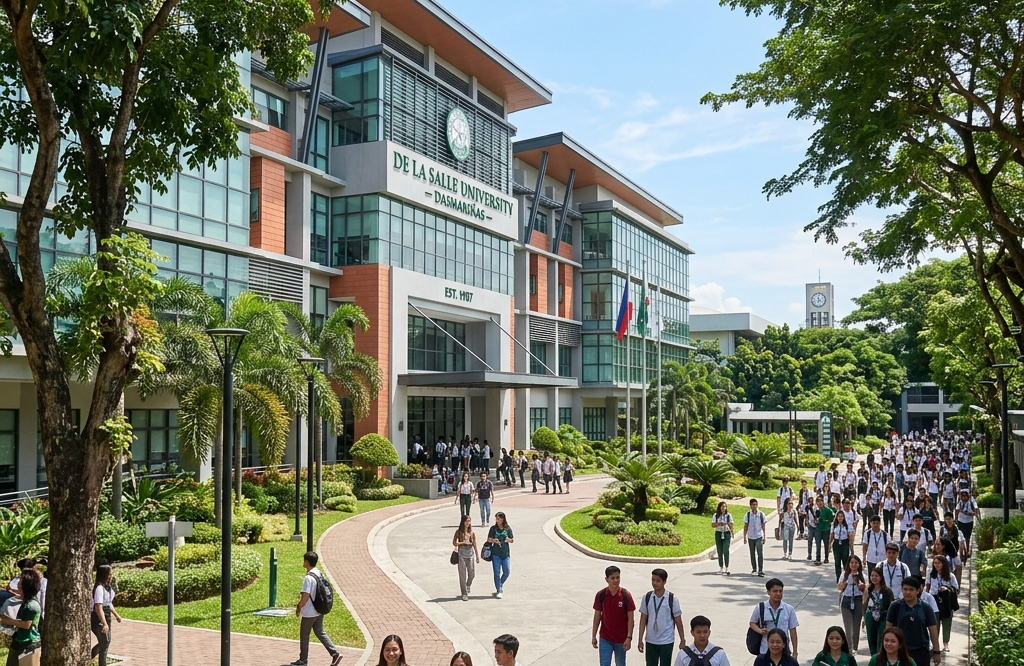
De La Salle University - Dasmariñas (DLSU-D) is the big anchor. It serves around 15,000 students and sits on a large campus along the Dasmariñas-Congressional Road corridor. The school's presence alone supports a mini-economy of boarding houses, food stalls, print shops, and review centers that wouldn't exist otherwise. La Salle also operates the De La Salle Medical and Health Sciences Institute (DLSMHSI) nearby, which brings medical students, nursing trainees, and hospital staff into the local mix.
But DLSU-D is far from the only school. Emilio Aguinaldo College (EAC) Cavite has a significant campus here, and there's also the Technological University of the Philippines (TUP) - Cavite, Philippine Christian University (PCU), National University Dasmariñas, STI College, and AMA Computer University, among others. The combined student population across all these institutions is massive, and it's the primary reason the city's food, rental, and retail sectors are so robust for a non-Metro Manila location.
So if you're a parent scouting schools or a student comparing your options south of Manila, Dasmariñas is basically the Cavite version of Manila's university belt along España. The difference? The cost of living is significantly lower, and you're not dealing with Manila traffic just to get to campus.
Student Rentals and Cost of Living
Rent in Dasmariñas is noticeably cheaper than Metro Manila, which is exactly why so many students and young professionals end up here. The most popular option for students is SMDC Green 2 Residences, a condo development right next to SM City Dasmariñas that was specifically marketed to the student crowd. Studio units there typically rent for ₱7,000 to ₱15,000 per month, depending on furnishing and floor level. Sharing a unit with a roommate brings it down even further.
Beyond condos, the traditional Dasma student experience is boarding houses and apartment rentals in the subdivisions near DLSU-D, particularly in the Burol and Villa Isabel areas. Monthly rent for a private room in a boarding house runs around ₱3,000 to ₱6,000, and shared apartments are even cheaper. Most landlords ask for one month advance and one to two months security deposit, which is standard for the area.
Day-to-day costs are very student-friendly. An inexpensive meal at a local carinderia or karinderya runs ₱70-₱150, and a fast-food combo meal is around ₱175. Students on a tight budget typically spend ₱25,000-₱40,000 monthly for everything: rent, food, transpo, utilities, and personal expenses. That's roughly half of what a similar setup would cost in Manila or Makati.
Where to Go in Dasmariñas
Malls, food strips, and the places where students actually hang out.
SM City Dasmariñas
Shopping MallThe city's main commercial anchor along Aguinaldo Highway. Groceries, cinema, fast food, and the adjacent Green 2 Residences condo. Always packed on weekends.
Robinsons Place Dasmariñas
Shopping MallThe newer alternative to SM, located along Governor's Drive. Better layout, less crowded, and a solid food court for student-budget meals.
Congressional Avenue Strip
Food & NightlifeThe city's main tambayan corridor. Lined with milk tea shops, restobars, cafes, and budget eateries. Busiest during school months, especially at night.
Dasmariñas Technopark
Industrial & EmploymentOne of Cavite's major economic zones. Hosts manufacturing and logistics firms that provide steady employment for the city's non-student population.
Commercial Growth and the Villar Effect
Dasmariñas is growing commercially at a pace that's hard to ignore. Beyond the SM and Robinsons malls, newer mixed-use developments are popping up along the Aguinaldo Highway and Governor's Drive corridors. The "Emporia at Metro South" project within the Villar City area is one of the larger developments in progress, aiming to create a modern commercial and residential district with walkable green spaces and co-working areas.
The industrial side is just as active. The First Cavite Industrial Estate and Dasmariñas Technopark host dozens of domestic and foreign corporations, providing consistent factory and logistics employment. For a lot of families in Dasmariñas, the equation is straightforward: affordable housing plus nearby industrial jobs plus accessible schools for the kids. That combination is why the population keeps climbing and why new subdivisions and low-rise condo projects keep getting approved.
CALAX has been a game-changer for connectivity. The Dasmariñas interchange provides a much faster route to SLEX and onward to Alabang or Makati, compared to the old Aguinaldo Highway crawl. During peak hours, Aguinaldo Highway through Imus and Bacoor is still a nightmare. CALAX doesn't eliminate traffic, but it gives drivers a viable bypass that shaves significant time off the commute.
Getting Here and Getting Around
From Manila, the most common route is via SLEX to CALAX, exiting at the Dasmariñas interchange. On light traffic, that's about 45 minutes to an hour. The alternative (and older) route is straight down Aguinaldo Highway from Bacoor, but that road gets congested easily, especially during rush hours and weekends. FX vans and buses run from PITX (Parañaque Integrated Terminal Exchange) and Alabang to the Dasmariñas area, with fares in the ₱80-₱120 range.
Within the city, jeepneys cover the main routes along Aguinaldo Highway and Congressional Road. Tricycles handle the last-mile trips into subdivisions and to specific school gates. The city is fairly spread out, so walking between major points isn't really practical. If you're a student, you'll quickly learn the jeepney route numbers and the specific tricycle stands near your school. That's just how Dasma works.
Updated on Jun 17, 2026 by George Gemson